
Quick answer
Ramadan 2027 is expected to begin in the UAE on or around 8 February 2027, with Eid Al Fitr on 9 or 10 March, subject to moon sighting. UAE imports of staples such as rice, onions and garlic start rising six to eight weeks before Ramadan, so restaurants and hotels should agree prices and delivery schedules with suppliers by mid-December 2026. Order dry, canned and frozen stock in late December and early January, then book standing orders for fresh produce, meat and dairy for the Ramadan weeks.
Ramadan changes almost everything about how a UAE kitchen runs. Daytime trade slows, evenings get busy, menus switch to iftar and suhoor, and hotels set up buffets and tents. Demand for certain ingredients jumps at the same time across the whole country, so the kitchens that plan early get better prices, fuller deliveries and fewer substitutions.
This guide is written by the team at Haider Ali Foodstuff Trading, a wholesale food supplier at the Al Aweer Fruits & Vegetable Market in Dubai. Ramadan is one of the busiest months of the year for food suppliers in the UAE, and this is the planning timeline we suggest to the restaurants, hotels and caterers we supply.
Key takeaways
- Ramadan 2027 is expected to start around 8 February 2027 and last 29 or 30 days.
- Staple food imports through Jebel Ali rise by up to 35% six to eight weeks before Ramadan, so supply tightens from mid-December.
- Onions, garlic, rice, chicken, bread, nuts and dates see some of the biggest rises in demand.
- Restaurant orders move into the evening: one study found orders between 17:00 and 23:00 rise 30–40% above normal.
- Lock in staple prices early, book fresh deliveries for the afternoon before iftar, and check your cold storage space before you order.
Ramadan 2027 key dates for planning
The exact dates depend on the sighting of the crescent moon, but the UAE's astronomical forecasts give a reliable planning window. According to The National, citing the UAE's Astronomy Centre, Ramadan is predicted to begin on 8 February 2027.
| Date (expected) | What happens | What to do |
|---|---|---|
| Mid-November 2026 | About 12 weeks before Ramadan | Review last Ramadan's sales and plan iftar and suhoor menus |
| 14–28 December 2026 | Staple imports start to rise, 6–8 weeks before Ramadan | Agree prices, quantities and delivery schedules with suppliers |
| Late December to mid-January | Importers and wholesalers build stock | Order dry, canned and frozen staples |
| Late January 2027 | Last 2 weeks before Ramadan | Confirm standing orders for fresh produce, meat and dairy, and clear freezer space |
| 8 February 2027 | First day of Ramadan | Switch to Ramadan delivery times and daily stock checks |
| Around 28 February 2027 | Last 10 days of Ramadan begin | Place Eid catering orders and check supplier holiday hours |
| 9 or 10 March 2027 | Eid Al Fitr, with a 3 to 4 day public holiday | Have Eid stock in before the holiday starts |
Ramadan moves about 11 days earlier each year, so update these dates every year rather than reusing last year's plan as it is.
How demand changes during Ramadan
Demand does not simply go up across the board. Some ingredients rise sharply, some stay flat, and the time of day when food is needed changes completely.
| Item | Change in Ramadan | Source |
|---|---|---|
| Chicken | About 66.5% higher than the rest of the year | HLB, via Khaleej Times |
| Bread | About 63% higher | HLB, via Khaleej Times |
| Onions and garlic imports | Up 35% against a typical month | DP World, Jebel Ali |
| Rice imports | Up 25% | DP World, Jebel Ali |
| Dried fruits | About 25% higher | HLB, via Khaleej Times |
| Nuts (walnuts, almonds, pistachios) imports | About 15% higher | DP World, Jebel Ali |
| Juices and soft drinks imports | About 5% higher | DP World, Jebel Ali |
The import figures come from DP World's Ramadan 2026 release, based on 2023–2025 averages, and the consumption figures from Khaleej Times. The same Khaleej Times report found that overall restaurant orders fall by 26–39% during Ramadan, while orders between 17:00 and 23:00 rise 30–40% above normal. In practice, that means a quieter day, a very busy iftar and a second peak late at night.
Your Ramadan stock list by category
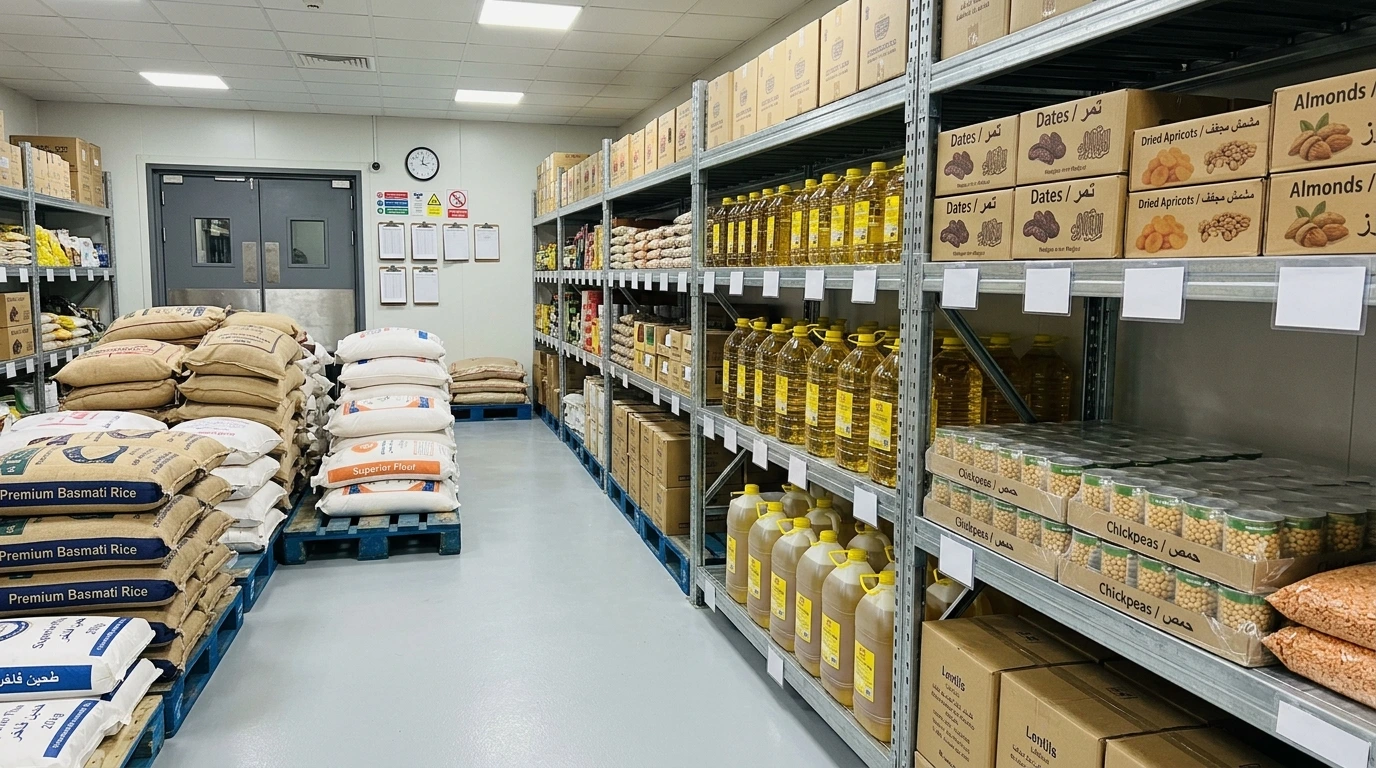
Every menu is different, but most iftar and suhoor menus in the UAE draw on the same core ingredients. Use this list to plan what to order early and what to book as regular deliveries.
| Category | Typical Ramadan items | When to order |
|---|---|---|
| Dry and canned goods | Rice, lentils, chickpeas, frying oil, tomato paste, canned beans, flour, sugar | Late December to early January |
| Dates, nuts and dried fruit | Dates for iftar, walnuts, almonds, pistachios, apricots, raisins | Early, before prices and demand peak |
| Frozen | Chicken, lamb and beef for bulk dishes, frozen sambousek and spring rolls, fries, ice cream | Early January, matched to freezer space |
| Fresh fruit and vegetables | Onions, garlic, tomatoes, potatoes, lemons, herbs, cucumbers, fruit for juices and fruit salads | Standing orders, delivered daily or every other day |
| Fresh and chilled meat | Chicken, lamb for ouzi and harees, minced meat for sambousek and kebabs | Standing orders, 2 to 3 times a week |
| Dairy and eggs | Laban, yoghurt, cheese for fatayer, cream for desserts, eggs | Standing orders, 2 to 3 times a week |
| Pastry and bakery | Filo, puff pastry, spring roll sheets, kunafa dough, bread | Frozen early, fresh bread daily |
We supply each of these through our canned and preserved food, fruit and vegetable supply, fresh and frozen meat supply, dairy and egg distribution, pastry and bakery supply and ice cream and frozen desserts services. Deciding which meat to buy frozen and which chilled? Our guide to fresh, chilled and frozen meat helps you choose for each dish.
Planning your Ramadan order?
Send us your iftar and suhoor menu or last year's quantities, and we'll quote your staples now and set up your Ramadan delivery schedule.
A step-by-step Ramadan supply plan
1. Start from last year's numbers
Pull your sales and purchase records from last Ramadan: covers per night, best-selling dishes and the quantity of each ingredient you used. If you are new, use your normal weekly order as a base and adjust for the items in the demand table above.
Good practice: plan the first week, the middle weeks and the last 10 days separately. Demand is rarely even across the month.
2. Fix your menus early
Menu changes after you have ordered are the main cause of shortages and waste. Agree the iftar menu, the buffet line-up and any set menus by mid-December, so your purchasing list is final before you request quotes.
3. Get quotes and agree prices before mid-December
Ask suppliers to quote your full list with pack sizes, and to hold prices for staples through Ramadan where they can. Agree acceptable substitutes in advance, such as another rice brand or another date variety, so a shortage does not become a crisis. Our guide to choosing a wholesale food supplier lists the questions to ask.
4. Buy long-life stock early
Rice, oil, canned goods, dates, nuts and frozen products can be bought in late December or early January and stored until needed. This spreads your spend, protects you from late price rises and frees your supplier's delivery slots for fresh food during Ramadan.
Avoid: buying more than you can store properly. Stock on the floor, in overloaded chillers or in a hot dry store is stock you may lose.
5. Check your cold storage space
Bigger orders need more freezer and chiller space. Count your shelves before you order, defrost freezers in January, and plan where Ramadan stock will go. Our food storage temperatures guide explains how to load chillers and freezers without losing temperature.
6. Book standing orders for fresh food
Set a fixed delivery schedule for produce, fresh meat and dairy: daily or every other day for fruit and vegetables, and 2 to 3 times a week for meat and dairy. Ask for deliveries in the early afternoon, so stock arrives in time for iftar preparation, and confirm your supplier's Ramadan working hours.
7. Plan Eid before the last 10 days
Eid Al Fitr brings a 3 to 4 day public holiday, and many suppliers and ports run reduced hours. Place Eid catering and holiday-period orders by the start of the last 10 days of Ramadan, and have them delivered before the holiday begins.
Food safety for iftar buffets and tents
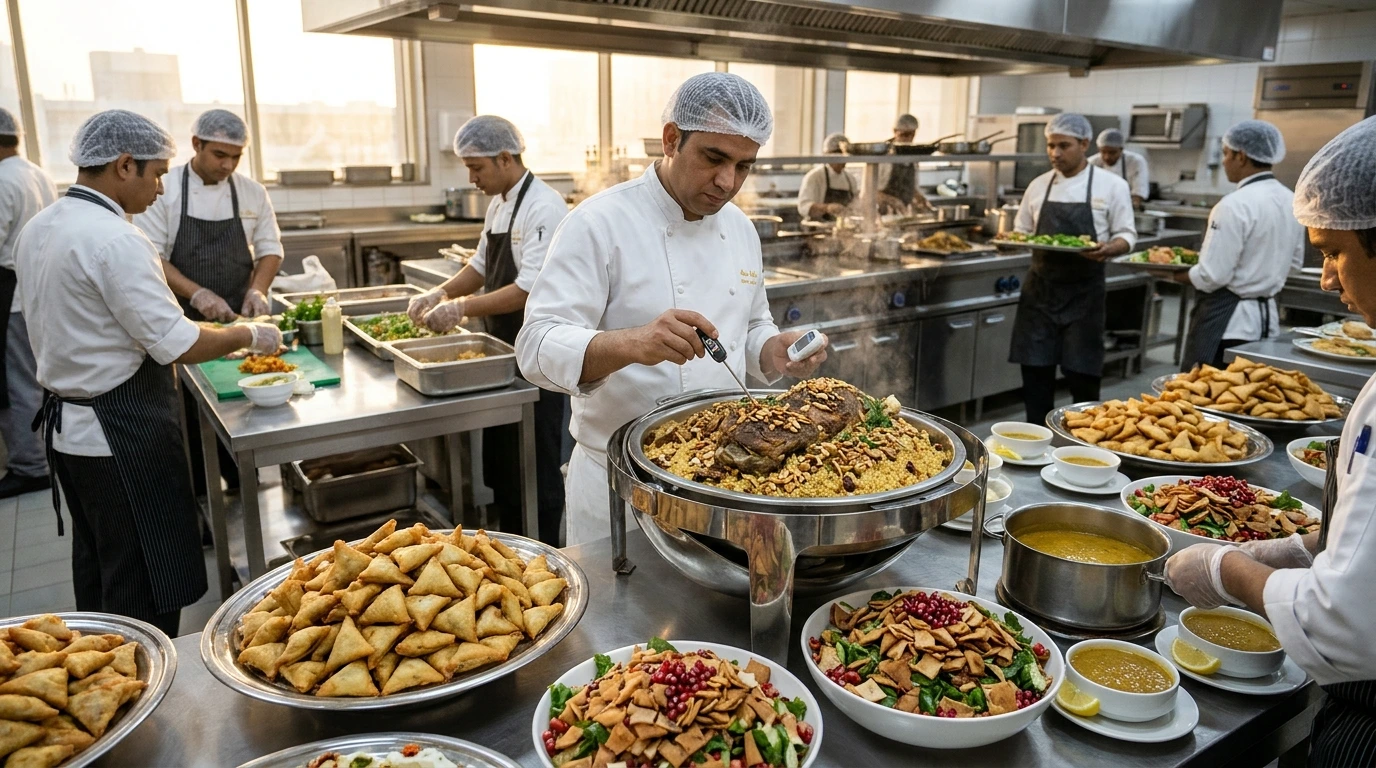
Iftar buffets and large-batch cooking bring extra food safety risks, and Dubai Municipality runs intensive inspection campaigns during the month. The basic rules from the Dubai Food Code still apply:
- Keep hot buffet food at 60°C or above and cold food at 5°C or below.
- Do not leave high-risk food in the 5°C to 60°C danger zone for more than 2 hours (hot) or 4 hours (cold).
- Cook in batches timed for iftar rather than cooking everything in the morning.
- Change frying oil regularly. Oil quality is one of the things inspectors check during Ramadan.
- Check every delivery on arrival, especially when deliveries are larger and arrive close to service. Our delivery receiving checklist covers what to check.
Displaying food outside your premises before iftar needs a prior permit from Dubai Municipality, and in recent years outdoor display has been limited to the two hours before iftar. Check the current year's rules with Dubai Municipality, or your local municipality outside Dubai, before Ramadan starts.
Cut waste during Ramadan
Buffets and large iftar spreads produce more waste than à la carte service. A few simple habits keep both waste and food cost down:
- Forecast by bookings. Use reservations and last week's covers to set each night's production, and review it daily.
- Refill buffets in smaller trays. Smaller trays refilled often stay fresher and leave less to throw away at the end.
- Use the oldest stock first. With larger deliveries, rotation slips easily. Label and date everything.
- Donate safe surplus. Unserved food that has been kept at safe temperatures can go to food banks such as the UAE Food Bank instead of the bin.
Frequently asked questions
When does Ramadan 2027 start in the UAE?
Ramadan 2027 is expected to begin on or around 8 February 2027, according to forecasts from the UAE's Astronomy Centre. The official start is confirmed after the crescent moon is sighted, so the date can move by a day.
When is Eid Al Fitr 2027?
Eid Al Fitr 2027 is expected on 9 or 10 March 2027, depending on whether Ramadan lasts 29 or 30 days. The UAE public holiday is expected to run for 3 to 4 days.
When should restaurants order food for Ramadan?
Agree prices and delivery schedules with suppliers by mid-December, order dry, canned and frozen stock in late December or early January, and confirm standing orders for fresh food two weeks before Ramadan. UAE staple imports start rising six to eight weeks before the month begins.
Which foods are most in demand during Ramadan in the UAE?
Chicken, bread, onions, garlic, rice, dates, nuts and dried fruit see some of the biggest rises. Laban, juices, lentils, frying oil and pastry for sambousek and fatayer are also core iftar ingredients.
How can restaurants avoid shortages during Ramadan?
Fix your menu early, give your supplier a full list with quantities by mid-December, agree substitutes in advance and buy long-life stock early. Book regular deliveries for fresh food rather than placing large last-minute orders.
Do I need a permit to display food outside my restaurant before iftar?
In Dubai, displaying food outside your premises before iftar needs a prior permit from Dubai Municipality, and in recent years it has been limited to the two hours before iftar. Rules can change each year, so check with your municipality before Ramadan.
Secure your Ramadan supply early
Haider Ali Foodstuff Trading supplies fresh, chilled, frozen and dry food to restaurants, hotels and caterers across the UAE, with one delivery schedule for the whole month.
Sources
- The National, Expected Ramadan 2027 start date and Eid Al Fitr holiday dates in UAE (2 September 2026).
- DP World, Rise in food flows through Jebel Ali ahead of Ramadan (11 February 2026).
- Khaleej Times, How Ramadan reshapes spending habits across the UAE (6 March 2026), citing HLB and Syrve.
- Gulf News, Dubai Municipality conducts intensive food inspection campaigns this Ramadan (2022): outdoor display permits and inspections.
- Dubai Municipality, Food Code: sections 3.3 (time limits) and 3.6 (temperature control).