
Quick answer
To choose a wholesale food supplier in Dubai, confirm they are a licensed, approved source that Dubai Municipality inspects. Check that they can keep chilled food at 5°C or below and frozen food at around -18°C all the way to your door, cover the categories you buy, deliver on your schedule, provide halal paperwork where needed, and quote like for like. The 10 questions below help you check each point before your first order.
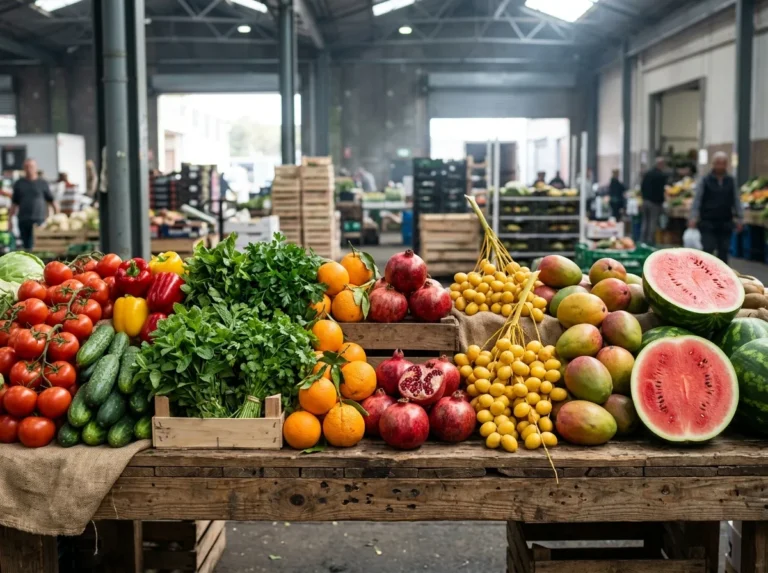
For a restaurant, hotel or supermarket in the UAE, your food supplier shapes your food cost, your menu consistency and how often your team runs out of stock mid-service. Because the UAE imports the large majority of its food, with the UAE and Saudi Arabia together importing more than 85% of what they eat according to Allianz Trade's 2025 agrifood report, a supplier's sourcing network and cold chain matter as much as their price list.
This guide is written by the team at Haider Ali Foodstuff Trading, a wholesale food supplier based at the Al Aweer Fruits & Vegetable Market in Dubai. It covers what we check, and what our own customers ask us, before a supply relationship starts.
Key takeaways
- Only buy from licensed suppliers that Dubai Municipality's food control inspects. The Dubai Food Code calls these "approved sources".
- Ask how chilled (5°C or below) and frozen (around -18°C) food is stored and transported, not only how it is priced.
- Compare quotes on the same products, pack sizes and delivery terms, or the cheapest quote can turn out the most expensive.
- Agree up front how short deliveries, substitutions and rejected items are handled.
What makes a good wholesale food supplier in the UAE?
A good wholesale food supplier is a licensed food trading company that delivers the right products, at the right temperature, on the agreed day, at a predictable price, and fixes problems quickly when something goes wrong. Price matters, but in commercial kitchens a missed delivery or a warm box of chicken costs far more than a few dirhams per kilo.
In practice, buyers in Dubai judge suppliers on five things: food safety and compliance, range, reliability, price transparency and service. The questions below cover all five.
10 questions to ask before choosing a food supplier in Dubai
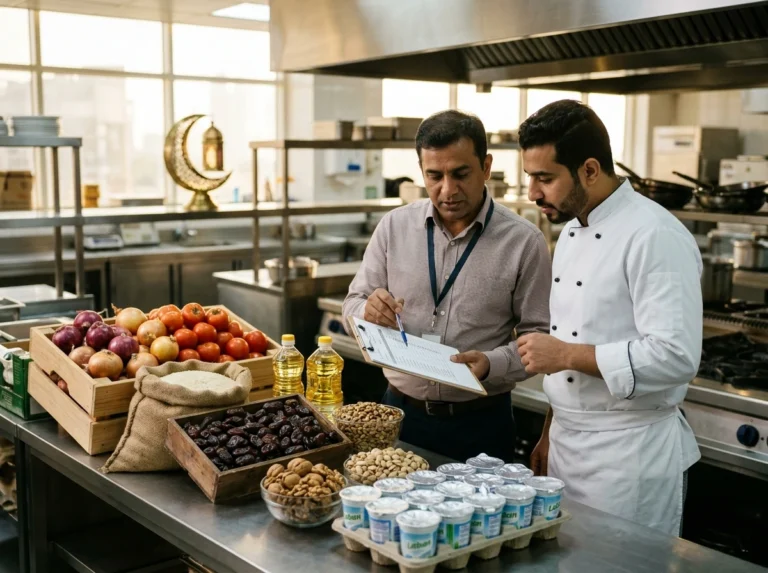
Are you licensed, and are you an approved food source?
The Dubai Municipality Food Code (section 3.2.2.1) requires food to be obtained from approved sources: establishments licensed to operate in the UAE and inspected by the emirate's food control authority. Buying outside that rule puts your own inspection grade at risk.
A good answer: a valid trade licence for foodstuff trading, a physical address you can visit, and inspection records they are happy to share. Dubai Municipality's Foodwatch platform also lets registered establishments share a QR code that shows their details and inspection grade.
Which product categories can you supply?
Every extra supplier means another delivery to receive, another invoice to check and another relationship to manage. Find out whether one supplier can cover produce, meat, dairy, bakery, frozen and canned lines, or whether you will still need three or four.
A good answer: a clear list of categories with examples, plus honesty about what they do not stock. See the full range a single supplier can cover on our food supply services page.
How do you keep chilled and frozen food at the right temperature?
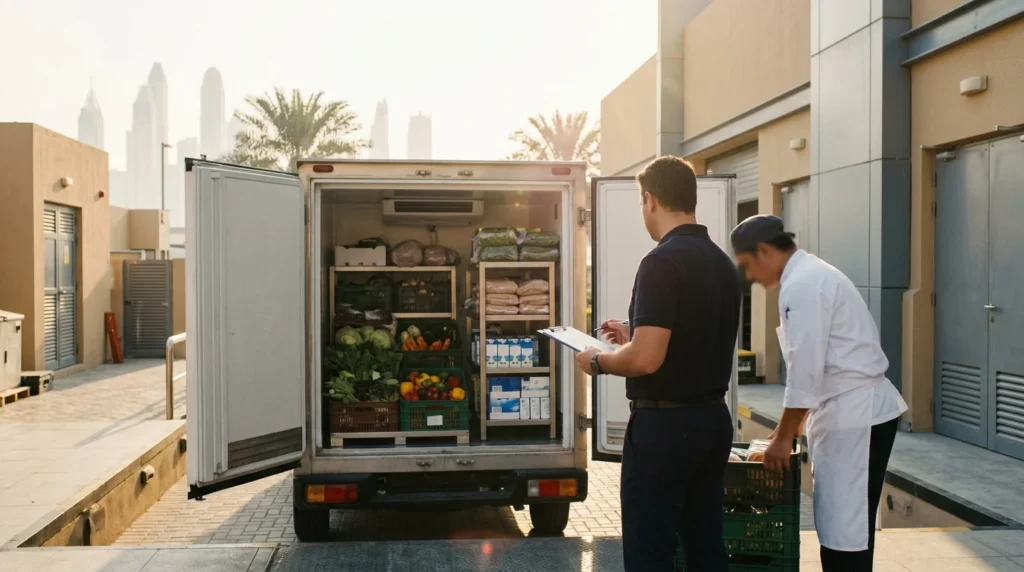
The Dubai Food Code says high-risk food should be kept at or below 5°C during delivery, and it prefers -18°C or below for frozen food. In UAE summer heat, a supplier without proper cold storage and refrigerated vehicles cannot meet that consistently.
A good answer: cold rooms and freezers on site, temperature-controlled vehicles, and a willingness to let you probe products on arrival. This matters most for fresh and frozen meat, dairy and eggs, and ice cream and frozen desserts.
Where does your produce and meat come from?
Origin affects taste, consistency, price and availability across the year. A supplier with both local and international sources can keep supply steady when one origin goes out of season or a shipment is delayed.
A good answer: they can name origins for your key items and explain how they cover gaps. A supplier at Dubai's central market sees fresh stock as it arrives, which helps with fresh fruit and vegetable supply.
Can you provide halal documentation where it is needed?
For meat, poultry and products that carry a halal claim, ask for halal certificates issued by a certification body recognised in the UAE. A logo on a box is not the same as the documentation for a specific product or shipment.
A good answer: certificates provided on request for the products you buy, with the certifying body clearly named.
Want answers to these questions for your business?
Send us your product list and we'll confirm categories, delivery and wholesale pricing.
Which days, times and areas do you deliver to?
A delivery that arrives during lunch service is almost as bad as one that never arrives. Match the supplier's delivery windows to your prep schedule and check they cover your emirate and area.
A good answer: fixed delivery days, an agreed time window, and a clear cut-off time for next-day orders.
What are your minimum order quantities and pack sizes?
Wholesale pricing usually depends on volume and pack size. A 10 kg case may be cheaper per kilo, but not if half of it is wasted. Ask which pack sizes are available for each item you buy regularly.
A good answer: pack sizes and minimums for your top items, and flexibility on quantities as your business grows.
How do you handle short deliveries, substitutions and returns?
The Food Code expects you to return and document unacceptable food at delivery, such as damaged packs, food outside its temperature or items close to expiry. Your supplier's process for this matters as much as their process for getting it right.
A good answer: substitutions only with your approval, credit notes or replacements for rejected items, and a named person who resolves issues the same day.
How is your pricing quoted, and how often does it change?
Fresh produce and meat prices move with seasons and supply; canned and frozen lines are usually steadier. Understand which prices are fixed, which change weekly, and how you will be told.
A good answer: itemised quotes per unit and pack size, a clear validity period, and notice before price changes.
Who do I contact when something goes wrong?
Problems happen in every supply chain. What separates good suppliers is how quickly someone picks up the phone.
A good answer: a direct phone or WhatsApp contact for orders and issues during your working hours, not a general inbox.
Supplier red flags to watch for
- No trade licence, no fixed address, or reluctance to let you visit.
- Chilled or frozen goods delivered in vans without refrigeration.
- Quotes without pack sizes, units or validity dates.
- Frequent substitutions made without asking you first.
- Labels missing ingredients or date codes, or short remaining shelf life on delivery.
- No clear process or contact for returns and credit notes.
One supplier or several?
Many UAE restaurants still buy from four or five suppliers: one for produce, one for meat, one for dairy and so on. Consolidating with a supplier that covers most categories saves receiving time and admin, but only works if that supplier is strong in the categories that matter most to your menu.
One main supplier
- Fewer deliveries to receive and check
- One invoice and one account to manage
- Stronger negotiating position on volume
- One contact for every issue
Several specialist suppliers
- Backup if one supplier lets you down
- Can pick the best source per category
- More deliveries, invoices and admin
- Harder to compare overall cost
A practical middle ground is one main supplier for most of your order, with a backup for your two or three most critical items. Our wholesale food trading service is built for that kind of consolidated supply.
How to compare wholesale food quotes like for like

- List your 20 most-used items with the quantity you buy each week. These usually make up most of your spend.
- Specify pack size and grade for each item, for example "chicken breast, boneless, fresh, 2 kg pack".
- Send the same list to every supplier and ask for unit prices, pack sizes and price validity.
- Compare price per kilo or per unit, not per case, so different pack sizes are fair.
- Add the cost of delivery terms, such as minimum orders or delivery charges.
- Score service, not just price, using the 10 questions above.
| Criteria | What to check | Red flag |
|---|---|---|
| Compliance | Trade licence, approved source, inspection grade | No licence or address |
| Cold chain | Cold storage, refrigerated vehicles, temperature on arrival | Chilled goods above 5°C |
| Range | Categories covered for your menu | Constant "out of stock" |
| Reliability | Delivery days, time windows, cut-off times | Late or missed deliveries |
| Pricing | Itemised unit prices, validity, notice of changes | Quotes without pack sizes |
| Service | Named contact, returns and credit process | No one answers on delivery day |
What to check when the first delivery arrives
The first delivery tells you more than any sales meeting. These checks follow the receiving guidance in section 3.2.3.1 of the Dubai Food Code. For the full step-by-step process, see our chilled and frozen food delivery receiving checklist.
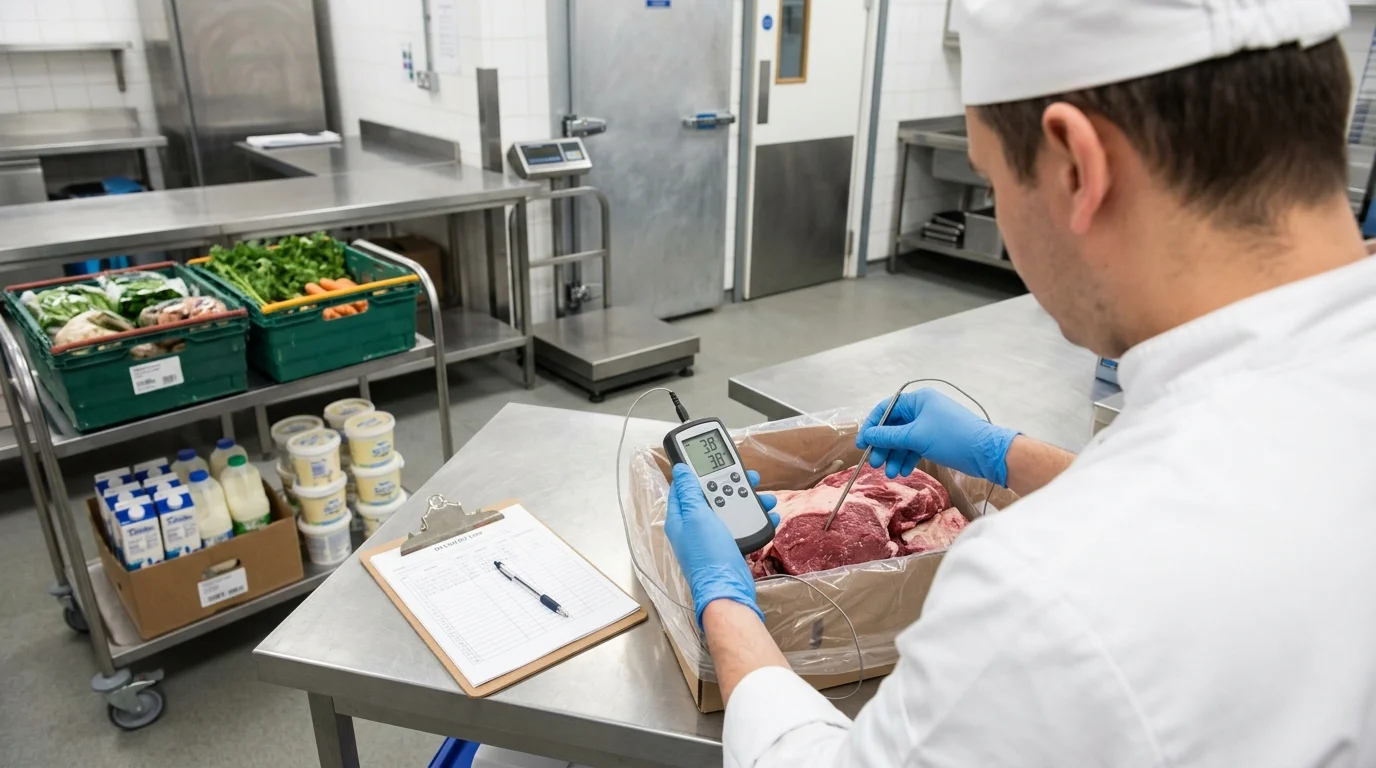
- Chilled high-risk food is at 5°C or below; frozen food is solidly frozen, ideally -18°C or below.
- Packaging is intact, clean and free from pests or damage.
- Labels show ingredients and date codes, with enough shelf life left for you to use the stock.
- The delivery vehicle is clean and suitable for the food it carries.
- Anything unacceptable is returned and recorded on the delivery note.
- Food goes into the correct storage straight after checking.
Food safety rules are updated from time to time. Check the latest requirements with Dubai Municipality or your local food control authority, especially if you operate outside Dubai.
Frequently asked questions
How do I know if a food supplier in Dubai is approved?
Ask for their trade licence and confirm they are a licensed establishment inspected by Dubai Municipality's food control. The Dubai Food Code requires food businesses to buy from these approved sources. Registered establishments can also share their Foodwatch QR code, which shows their details and inspection grade.
What temperature should chilled and frozen food be delivered at?
Under the Dubai Municipality Food Code, high-risk chilled food should be at or below 5°C during delivery, and -18°C or below is preferred for frozen food. Check temperatures with a probe thermometer when the delivery arrives.
Is it better to use one food supplier or several?
One main supplier reduces deliveries, invoices and admin, and gives you more buying power. Several suppliers give you backup. Many businesses use one main supplier for most of the order and keep a backup for their most critical items.
How should I compare quotes from food suppliers?
Send every supplier the same list of items, grades, pack sizes and weekly quantities. Compare price per kilo or per unit, add delivery terms, and score each supplier on reliability and service as well as price.
What documents should a meat supplier provide in the UAE?
Ask for their trade licence, product labels with origin and date codes, and halal certificates from a UAE-recognised certification body for meat and poultry. Imported meat should also have the shipment documents required for UAE clearance.
Does Haider Ali Foodstuff Trading supply businesses outside Dubai?
Yes. Haider Ali Foodstuff Trading supplies restaurants, hotels, supermarkets and caterers across the UAE from its base at the Al Aweer Fruits & Vegetable Market in Dubai.
Looking for a wholesale food supplier in Dubai?
Haider Ali Foodstuff Trading supplies fresh, frozen and canned food to businesses across the UAE. Send us your list and compare us on the questions above.
Sources
- Dubai Municipality, Food Code: sections 3.2.2.1 (approved sources) and 3.2.3.1 (receiving food).
- Dubai Municipality, Foodwatch FAQs: establishment QR codes and supplier details.
- Allianz Trade, Agrifood report 2025: UAE and KSA: food import share.