
Quick answer
Buy fresh or chilled meat for dishes where texture is the selling point, such as steaks, grills, kebabs and roasts, and buy frozen meat for slow-cooked, minced and high-volume dishes, such as curries, biryani, stews, burgers and catering. Fresh and chilled meat is never frozen. Chilled vacuum-packed beef can last up to 120 days from slaughter under UAE rules. Frozen meat kept at -18°C stays safe for months, costs less per kilo, but loses some weight as it thaws. Compare suppliers on the cost per usable kilo, not the price on the invoice.
Meat is usually the biggest line on a restaurant's food bill, and the choice between fresh, chilled and frozen changes more than the price. It affects how your dishes taste, how much you throw away, how often you need deliveries and how much chiller and freezer space you need.
This guide is written by the team at Haider Ali Foodstuff Trading, a wholesale food supplier at the Al Aweer Fruits & Vegetable Market in Dubai. We supply beef, lamb, poultry and seafood in all three formats to restaurants, hotels, butcheries and caterers across the UAE, so we see every day which format works for which kitchen.
Key takeaways
- Fresh and chilled meat has never been frozen. Chilled meat is fresh meat kept just above freezing, usually vacuum packed, so it lasts much longer.
- UAE rules allow chilled vacuum-packed beef up to 120 days from slaughter, but chilled vacuum-packed poultry only 7 days.
- Frozen meat at -18°C stays safe, and quality holds for months if it is well packed and never thawed and refrozen.
- Frozen meat loses weight as drip when it thaws, so compare cost per usable kilo, not price per kilo.
- Most kitchens get the best result by mixing formats: chilled or fresh for the hero dishes, frozen for the rest.
Fresh, chilled and frozen meat: what each one means
In the UAE meat trade, the three words describe how the meat has been kept since slaughter. They are not grades of quality.
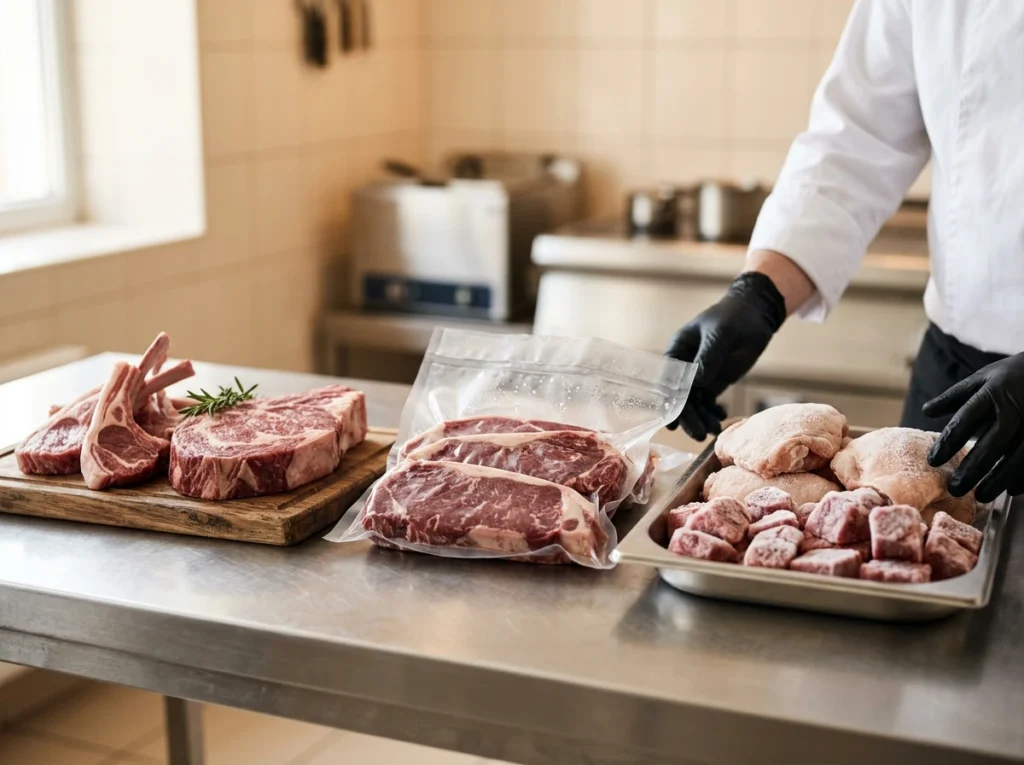
- Fresh meat is slaughtered recently and sold within a few days, without being frozen. In the UAE this is often local or regionally sourced lamb, mutton and chicken, delivered almost straight from the slaughterhouse.
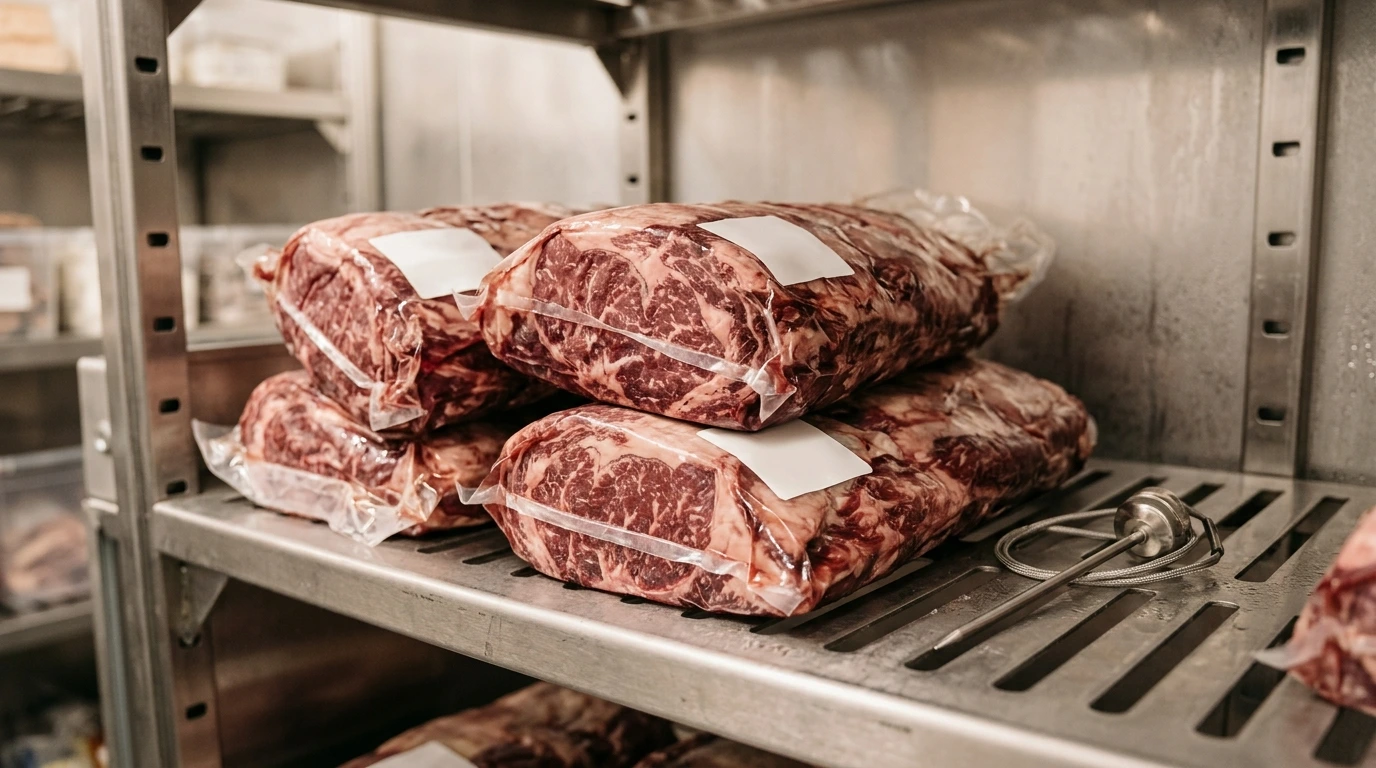
- Chilled meat is also never frozen, but it is kept at a controlled temperature just above freezing, usually in a vacuum pack. Much of the imported beef and lamb in UAE kitchens arrives this way, often by sea.
- Frozen meat is frozen soon after slaughter and processing, and held at -18°C or colder. It is the format for bulk stock, long storage and stable prices.
Under the Dubai Municipality Food Code, fresh and chilled meat must be kept at 5°C or below and frozen meat at -18°C, from delivery until it is cooked.
How long each format lasts
Shelf life is often the deciding factor, because it controls how often you need deliveries and how much stock you risk losing.
| Format | Typical shelf life | What it means for your kitchen |
|---|---|---|
| Fresh meat and poultry, not vacuum packed | A few days | Order little and often, and use it quickly |
| Chilled vacuum-packed poultry | Up to 7 days from slaughter | Still short. Plan deliveries 2 to 3 times a week. |
| Chilled vacuum-packed beef and buffalo | Up to 120 days from slaughter | Check the slaughter date: the time left is what you are buying |
| Frozen meat and poultry | UAE recommends 12 months | Bulk buying and less frequent deliveries are possible |
The chilled and frozen limits above are the UAE import rules, summarised in the Canadian Food Inspection Agency's UAE export requirements. The 120-day limit for chilled beef was extended from 70 days in 2017, which made it practical to ship more chilled beef to the UAE by sea, according to Meat & Livestock Australia.
Once a vacuum pack is opened, the long shelf life ends. Treat the meat like fresh meat from that point and use it within a few days.
Quality, taste and texture
Well-handled frozen meat is safe and good to eat, but freezing changes it a little. As meat freezes, ice crystals form inside the muscle and damage some of its cells. When it thaws, part of the water and juice runs out as drip. Slow freezing, temperature swings in the freezer and thawing and refreezing all make this worse.
The difference shows most in dishes where the meat is the star and cooked quickly: a steak, a lamb chop, a grilled chicken breast. It matters much less in slow-cooked, braised, minced or sauced dishes, where the meat cooks in liquid and texture comes from the cooking itself.
Fresh or chilled meat
- Best texture and juiciness for grills and steaks
- No thawing time or thaw loss
- Chilled beef can be aged in the vacuum pack
- Higher price per kilo and shorter shelf life
- Needs more frequent deliveries and tighter rotation
Frozen meat
- Lower and steadier price per kilo
- Long storage, so you can buy in bulk
- Less waste from stock going out of date
- Some weight lost as drip during thawing
- Needs freezer space and planned thawing time
Which format suits which dish
Most kitchens do not need to choose one format for everything. Match the format to how each item is cooked and how much you use.
| Menu use | Best format | Why |
|---|---|---|
| Steaks, chops, mixed grills | Chilled or fresh | Texture and juiciness are what the guest pays for |
| Shawarma, kebabs, tikka | Fresh or chilled, frozen for high volume | Marinades help frozen meat, but fresh holds together better on the skewer |
| Curries, biryani, stews, mandi | Frozen or chilled | Long cooking evens out texture differences |
| Burgers and minced meat dishes | Frozen mince or patties, or fresh mince used the same day | Fresh mince spoils fastest of all meat |
| Fried chicken and chicken dishes in volume | Frozen, or fresh for daily use | Fresh chicken lasts only days |
| Hotel buffets, banqueting and catering | Frozen, with chilled for carving stations | Volume, planning and cost control matter most |
| Butcher counters and supermarkets | Fresh and chilled for the counter, frozen for the freezer aisle | Customers judge the counter by appearance |
Compare the cost per usable kilo
Frozen meat usually costs less per kilo, but not all of that kilo reaches the plate. Drip lost during thawing is weight you paid for. In one study published in European Food Research and Technology (Hansen et al., 2003), pork loin frozen in a conventional freezer lost about 12% of its weight as drip when thawed, compared with about 4% for fresh meat. Results vary by product, cut and how well the meat was frozen, so measure it in your own kitchen.
Here is a simple way to compare two quotes. The prices are examples only, not our prices.
| Chilled beef | Frozen beef | |
|---|---|---|
| Price per kilo on the invoice | AED 40 | AED 34 |
| Weight lost before cooking (thaw loss) | None | 10% |
| Usable kilo from each kilo bought | 1.00 kg | 0.90 kg |
| Cost per usable kilo | AED 40.00 | AED 37.78 |
In this example frozen beef is still cheaper, but the gap shrinks from AED 6 to about AED 2.20 per kilo. Then add what each format costs you in waste: chilled meat that goes out of date, or frozen meat damaged by poor storage.
Two more checks make quotes fair:
- Same cut and trim. "Beef striploin" from two suppliers can differ in fat cover and bone. Ask for the specification.
- Net weight. For frozen chicken and seafood, ask whether the price is for the net weight of the product or includes the protective ice glaze.
Our guide to choosing a wholesale food supplier explains how to set up a like-for-like comparison across your whole order.
Want to compare fresh, chilled and frozen prices?
Send us your weekly meat list and we'll quote each item in the formats we can supply, with pack sizes and shelf life.
What to check on the label and paperwork
Imported meat in the UAE comes with specific labels and documents. Check them on every delivery, and reject stock that does not have them.
- Halal slaughter certificate for beef, lamb and poultry, issued by an Islamic organisation accepted by UAE authorities. Ask your supplier for a copy.
- Species in Arabic on every item, as UAE labelling rules require.
- Dates on the inner pack: slaughter, production and expiry dates for chilled meat, and production or slaughter date and expiry date for frozen meat.
- Intact packaging: vacuum packs should be tight against the meat. A loose or puffy pack has lost its seal.
- Temperature on arrival: chilled at 5°C or below, and frozen meat hard, with no sign of thawing. Our chilled and frozen delivery receiving checklist covers each check step by step.
Storing and thawing meat in your kitchen

Whichever format you buy, its quality depends on how you store it. Keep fresh and chilled meat at 5°C or below on the bottom shelves of the chiller, below ready-to-eat food. Keep frozen meat at -18°C, sealed and dated.
Plan thawing ahead. The Dubai Food Code allows raw meat, poultry and fish to be thawed in a chiller with air at 10°C or less, and it should be cooked within 72 hours from the start of thawing. Thawing on the bench or in warm water is not allowed without approval, and thawed raw meat should not be refrozen. Thawing in the chiller also keeps drip loss lower than fast, warm thawing.
Our guide to food storage temperatures for UAE restaurants covers chiller shelf order, freezer rules and thawing in full.
A practical buying plan
- List your meat items and how many kilos of each you use per week.
- Mark your hero dishes, the ones guests come back for. Buy those fresh or chilled.
- Move slow-cooked, minced and high-volume items to frozen where the dish allows it, and test them in the kitchen first.
- Check your space. Frozen stock needs freezer capacity, and chilled stock needs regular deliveries and good rotation.
- Get quotes in each format and compare the cost per usable kilo.
- Review after a month: waste, thaw loss, guest feedback and food cost percentage.
Our fresh and frozen meat supply service covers beef, lamb, poultry and seafood in all three formats, with custom portioning and temperature-controlled delivery. If you also buy dairy, produce and dry goods, our wholesale food trading service can combine them into one delivery.
Frequently asked questions
Is frozen meat as good as fresh meat?
Frozen meat is just as safe and nutritious as fresh meat if it was frozen quickly and kept at -18°C. The main difference is texture: some juice is lost as drip when it thaws, which shows most in steaks and grilled dishes. For curries, stews, biryani and minced dishes, most guests cannot tell the difference.
What is the difference between fresh and chilled meat?
Neither has been frozen. Fresh meat is sold within a few days of slaughter. Chilled meat is kept at a controlled temperature just above freezing, usually vacuum packed, which gives it a much longer shelf life. Much of the imported beef and lamb described as "fresh" in the UAE is actually chilled.
How long does chilled vacuum-packed beef last in the UAE?
UAE rules allow chilled vacuum-packed beef and buffalo meat up to 120 days from the slaughter date, if the pack stays sealed and cold. Chilled vacuum-packed poultry is limited to 7 days. Once a pack is opened, use the meat within a few days.
How long can frozen meat be stored?
Frozen meat stays safe as long as it is kept frozen at -18°C or colder, but its quality slowly drops. The UAE recommends a 12-month shelf life for frozen meat and poultry. The USDA suggests about 4 to 12 months for frozen steaks and roasts, 9 to 12 months for chicken and 3 to 4 months for minced meat, for best quality.
Is frozen meat cheaper for restaurants?
Usually yes per kilo, but it loses weight as drip when it thaws. Divide the price per kilo by the share of weight left after thawing to get the cost per usable kilo, then compare that with the chilled or fresh price. Frozen also reduces waste from meat going out of date.
How should restaurants thaw frozen meat?
Thaw it in a chiller with air at 10°C or less, on a tray on the bottom shelf, and cook it within 72 hours from the start of thawing, as the Dubai Food Code requires. Do not thaw meat on the bench or in warm water, and do not refreeze thawed raw meat.
Fresh, chilled or frozen: get prices for all three
Haider Ali Foodstuff Trading supplies beef, lamb, poultry and seafood to restaurants, hotels, butcheries and caterers across the UAE, cut and packed to your specification.
Sources
- Dubai Municipality, Food Code: sections 3.2.7 (thawing and refreezing) and 3.6 (storage temperatures).
- Canadian Food Inspection Agency, United Arab Emirates: export requirements for meat and poultry products: UAE halal certificate, Arabic labelling and shelf-life rules.
- Meat & Livestock Australia, Opportunities in the Middle East (2020): UAE chilled beef shelf-life extension.
- Hansen et al., European Food Research and Technology (2003): thaw drip loss in frozen and fresh pork.
- NDSU Extension, Storing Food in the Freezer: USDA freezer storage times for best quality.